Minimally Invasive (MIS) Bunion Surgeons
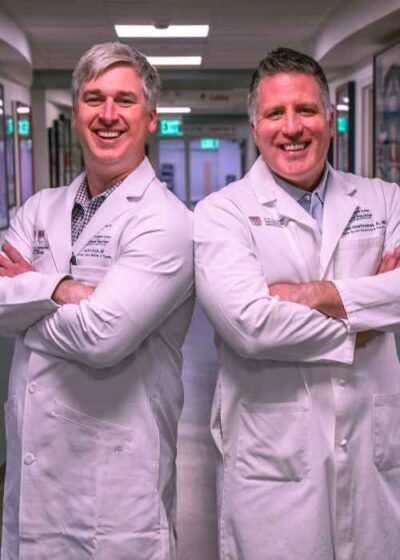
If you’re living with bunion pain that is affecting your daily activities or limiting your ability to enjoy the mountain lifestyle in Vail, Colorado, and the Eagle Mountain Range areas, it’s time to explore advanced treatment options. Dr. Thomas Haytmanek, and Dr. Jonathon Backus are the leading foot and ankle specialists in Vail, Colorado, with extensive experience in Minimally Invasive (MIS) bunion surgery. Their expertise in this modern surgical technique allows patients to achieve lasting pain relief with less downtime, minimal scarring, and a quicker return to walking, hiking, and skiing. Contact The Steadman Clinic’s Sports Foot and Ankle team today !
What Is MIS Bunion Surgery?
Minimally Invasive (MIS) Bunion Surgery uses special surgical tools that operate through small incisions in the foot. The surgery is done to correct the misalignment of the big toe joint by changing the shape of the bones and in some cases releasing tight soft tissue structures. Unlike traditional bunion procedures that require large incisions and longer recovery periods, MIS techniques cause less disruption to surrounding tissues and blood supply. The benefits of MIS Bunion surgery are:
- earlier return to weightbearing
- Improved post-operative big toe range of motion when compared to an open procedure
- Lower risk of infection and wound healing issues
- Minimal scarring
- Faster return to activity
- Improved cosmetic results
What are bunions?
Bunions are a common foot condition that can cause pain, swelling and deformity in the joint of the big toe. Active individuals can be prone to developing bunions due to repetitive stress on the feet from activities like hiking, skiing or running, and poor fitting shoe wear. A bunion forms when an imbalance in the foot mechanics cause the big toe to shift inward, crowding the smaller toes and creating a bony bump of the inside of the foot.

What causes bunions?
Common causes of bunions include:
- Wearing tight or narrow shoes (Ski Boots, Ice skates, Cycling Shoes, High Heels, etc.)
- Genetic predisposition
- Long term pressure leading to degenerative joint changes
- Activities that cause repeated stress: skiing, running, hiking
If you’re experiencing bunion pain in Vail or the surrounding Eagle, Vail Mountain Ranges, early evaluation by Dr. Haytmanek or Dr. Backus, orthopedic foot and ankle specialists, can help prevent further progression and identify treatment options tailored to your active lifestyle.
When is it time to consider MIS Bunion surgery?
Not all bunions require surgery and bunion pain can often be helped with conservative methods. However, if conservative therapies have failed to provide relief and if you are prevented from daily activities or exercise, it’s probably time to see Dr. Haytmanek or Dr. Backus. We recommend MIS Bunion surgery if patients in Vail, or the surrounding Eagle, Vail Mountain Ranges have:
- Persistent foot pain that limits walking or activity
- Difficulty wearing shoes due to the size or position of the bunion
- Progressive mild to moderate deformity of the big toe
- Swelling or irritation at the bunion site that doesn’t improve
- Failed response to conservative treatments
How is MIS Bunion surgery done?
Minimally invasive bunion surgery is typically done under regional anesthesia with sedation, or a light general anesthetic. Dr. Haytmanek and Dr. Backus have extensive training and expertise performing MIS Bunion surgery. The procedure occurs in about an hour and is typically performed as follows:
- The surgeon makes several tiny incisions along the side of the foot.
- Using specially designed surgical instruments and a Shannon Burr, a small bone cut is made (called an osteotomy) just behind the big toe joint. The metatarsal head is repositioned to restore proper alignment of the big toe.
- Specially designed screws are used to internally stabilize the correction, though these are placed without the need for large incisions.
- Using the same burr and a key-hole incision, a small wedge of bone is removed from the inside of the great toe proximal phalanx (called an Akin osteotomy). The toe is then shifted to the inside and held with additional screws through a small incision.
- Any remaining bump on the inside of the foot is then removed with the burr through the existing incisions.
- In some cases, soft tissue may need be released through additional percutaneous incisions.
- The instruments are removed and the skin is closed.

Pre-MIS Bunion Surgery

6-Weeks Post Op

6 Months Post Op
How long is the recovery after MIS Bunion surgery?
One of the most significant advantages Dr. Haytmanek and Dr. Backus have found with MIS Bunion surgery is the faster recovery time for their patients. Most can expect to bear weight immediately and swelling or discomfort are typically lower compared to traditional, open surgery. While the complete recovery may take 12 weeks, many patients can return to light activity in a matter of days. Normal shoes may we worn around 4-6 weeks, with a full return to activities in about 8-12 weeks depending on the patient.

Post MIS Bunion Surgery
Below is an example of Open Bunion Surgery -vs- MIS Bunion Surgery

Open Bunion Surgery

MIS Bunion Surgery
MIS Bunion Treatment in Vail, Colorado and surrounding Eagle, Vail Mountain Ranges:
If you’re struggling with bunion pain and looking for a solution that supports your active lifestyle, minimally invasive (MIS) bunion surgery may be the right choice. For patients in the Vail, Colorado and the surrounding Eagle, Vail mountain ranges, foot and ankle specialists, Dr. Haytmanek and Dr. Backus have advanced training in MIS techniques and can help you explore your options to get you back on your feet.

Before MIS Bunion Surgery

After MIS Bunion Surgery